One Critically Injured In Road Accident In Kolkata
The victim who was on a motorcycle attempted to overtake the bus from behind and head straight towards Red Road, only to end up under its wheels.
Walk through any Indian city at dawn and you will see a parallel welfare system already at work.




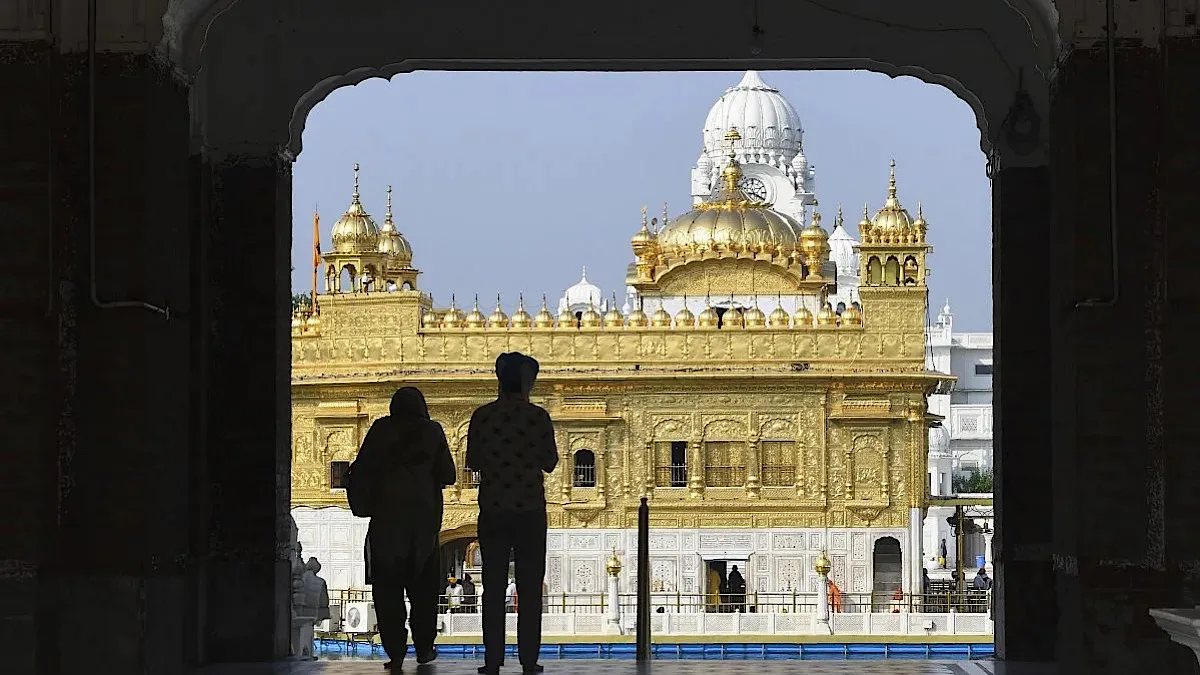
Golden temple (Photo:ANI)
Walk through any Indian city at dawn and you will see a parallel welfare system already at work. Outside the Golden Temple in Amritsar, volunteers stir massive cauldrons for the langar. In Kolkata, small neighbourhood clubs collect rice and vegetables for evening kitchens. At Tirupati, devotees drop notes into hundis with a quiet sense of obligation. None of this appears in budget speeches, and very little of it fits neatly into spreadsheets.
Yet this is where a large part of India’s social safety net actually lives. For years, public debate has treated philanthropy as an extension of corporate governance ~ something measured through CSR disclosures, foundation endowments, and the press releases of tycoons. That picture is incomplete. The deeper truth is that India runs on millions of small, repeated acts: a shopkeeper paying for a stranger’s meal, a family sending cooked food to a local temple, a group of students spending Sundays cleaning a flooded lane in Chennai. These gestures are not symbolic.
Advertisement
They are infrastructure. The roots of this habit are older than the republic. The idea of daan in Hindu traditions, zakat in Islam, and seva in Sikh practice frames giving not as charity but as duty. This is why the language of “donor” and “beneficiary” often feels out of place. When farmers in Punjab fund a community kitchen, or when traders in Surat organise relief after floods, they are not performing virtue for applause; they are maintaining social order in places where the state’s reach is uneven and bureaucracy is slow. A system driven by faith and proximity can be generous and also uneven. Some causes attract endless support; others ~ mental health, urban homelessness, sanitation ~ struggle for attention because they lack ritual or visibility.
Advertisement
Cash slipped to a beggar at a traffic signal is an act of conscience, but it does not replace the need for durable solutions in housing, healthcare, or employment. The risk is that informal generosity becomes a moral alibi for institutional neglect. There is also a modern twist. Digital payments, crowdfunding platforms, and WhatsApp appeals are changing how Indians respond to distress. After Cyclone Michaung hit Tamil Nadu, relief money moved faster through UPI links than through formal grant pipelines. That speed is strength but it also blurs accountability. When help becomes frictionless, oversight becomes optional. The real question, then, is not whether Indians give enough.
They already do ~ daily, habitually, often quietly. The harder question is how to connect this vast, decentralised impulse to public purpose. Imagine if municipal bodies in cities like Mumbai or Patna treated community kitchens, temple trusts, and volunteer groups as partners rather than afterthoughts. Imagine tax and regulatory systems that made small, frequent giving easier to track without suffocating it in paperwork. India does not suffer from a deficit of generosity. It suffers from a failure to recognise that its most reliable welfare engine is not a headline-grabbing cheque but a million ordinary hands passing food, time, and money forward ~ every single day.
Advertisement